Home Products
Dental Equipment Operating Theatre Equipment Diagnostic Equipment Hospital Furniture Ambulance & EMS Sterilizer (Autoclave) Dialysis Systems Contrast Media About Gallery News Contact
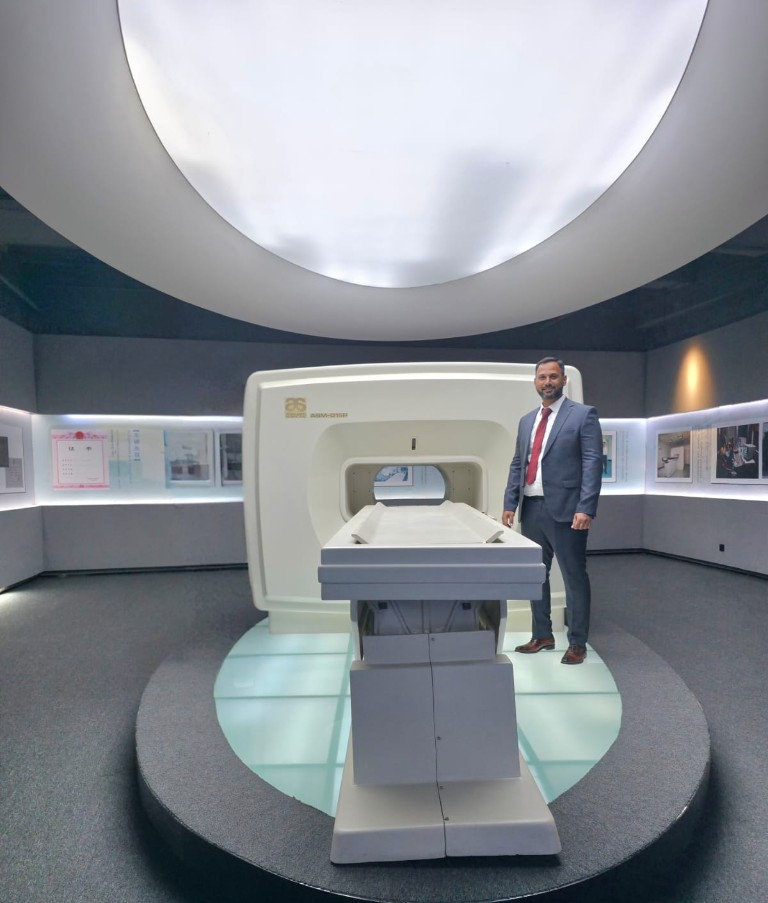
Historic ASM-015P — China’s first MRI by ANKE — on exhibit; the unit that launched domestic MRI manufacturing.
Heritage

China's first MRI — the ANKE pioneer story

To visit the ASM-015P on display — China’s first MRI — is to step in front of living history. You are not looking at a replica: you are seeing the machine that marked the moment domestic MRI moved from ambition to reality. For anyone who supplies or uses imaging today, it is a rare and moving witness to where both ANKE and China’s MRI story truly began.

Shenzhen Anke High-tech Co., Ltd. (ANKE) developed China's first MRI system, bringing domestic superconducting and permanent-magnet imaging from blueprint to bedside. Founded in 1986 as a Sino–US joint venture, ANKE is widely recognised as a pioneer in Chinese medical imaging.

Today the company engineers a full spectrum of solutions — from high-field and open permanent-magnet MRI to CT and complementary modalities — with global service networks supporting installation, training, and lifecycle care.

  • 1986 — ANKE established; focus on R&D and manufacturing of imaging systems.
  • 1989 — First domestic MRI realised; a landmark for national healthcare industry capability.
  • Legacy — By 2019, ANKE marked the 30th anniversary of that first system — three decades of innovation from the same engineering roots.

Mediview is proud to connect East African hospitals with ANKE’s modern platforms and documented field support — the same lineage that started with this groundbreaking system.
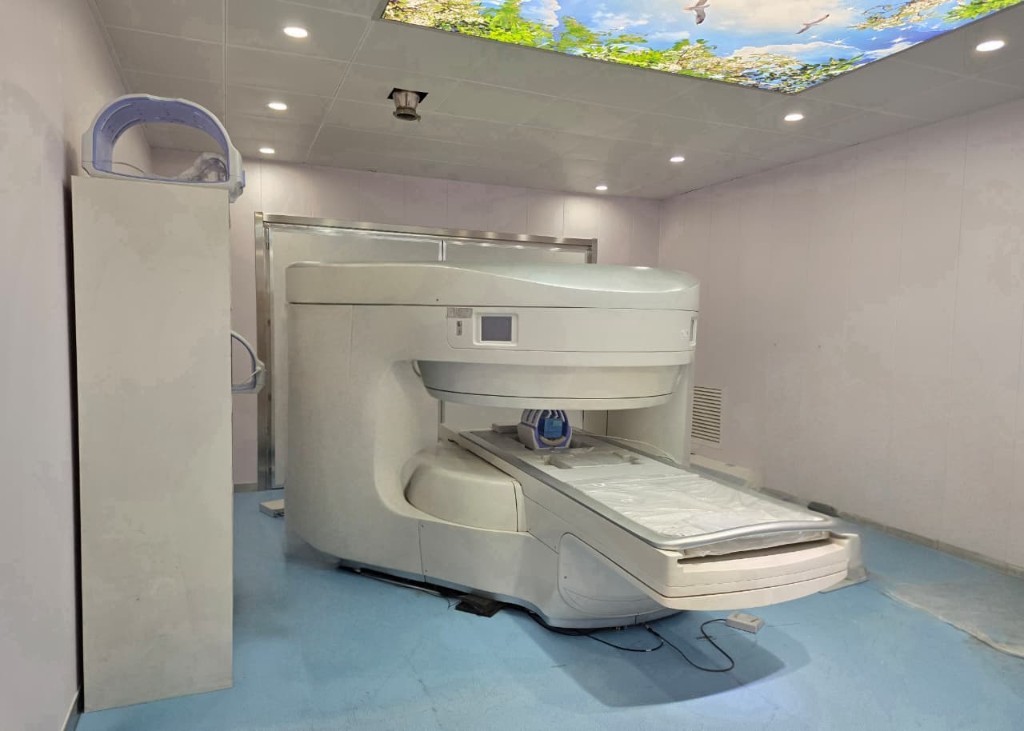
Open permanent-magnet MRI in Kenya — C-shaped scanner with patient table, calming sky-ceiling lighting, and modern clinical room.
Kenya installation

New-generation open MRI for Kenya — comfort meets 0.51 T performance

We are pleased to highlight a new-generation open permanent-magnet MRI programme coming online in Kenya — designed for patients who need space, calm, and access: paediatric cases, claustrophobia, larger body habitus, and interventional positioning where a tunnel system is limiting.

Why 0.51 T permanent magnet? Mid-field open systems use a C-shaped or vertical-field permanent magnet — no liquid helium consumption, often simpler siting than high-field cryogenic magnets, and predictable operating costs. The trade-off versus 1.5 T / 3 T is signal-to-noise ratio for some advanced sequences; for a wide range of routine musculoskeletal, spine, and general protocols, open mid-field MRI delivers dependable diagnostic value where patient tolerance is the bottleneck.

  • Field strength: ~0.51 T — balanced for open architecture and usable SNR for established clinical workflows.
  • Open design: Reduces anxiety; eases patient monitoring and access for nursing staff.
  • Siting: Permanent-magnet platforms typically avoid cryogen logistics; shielding and power requirements are assessed per room layout.
  • Experience: Installations can pair calming environments (e.g. sky-ceiling lighting) with structured onboarding so technologists ramp quickly.

Contact Mediview for site surveys, protocol planning, and training alongside your build-out.

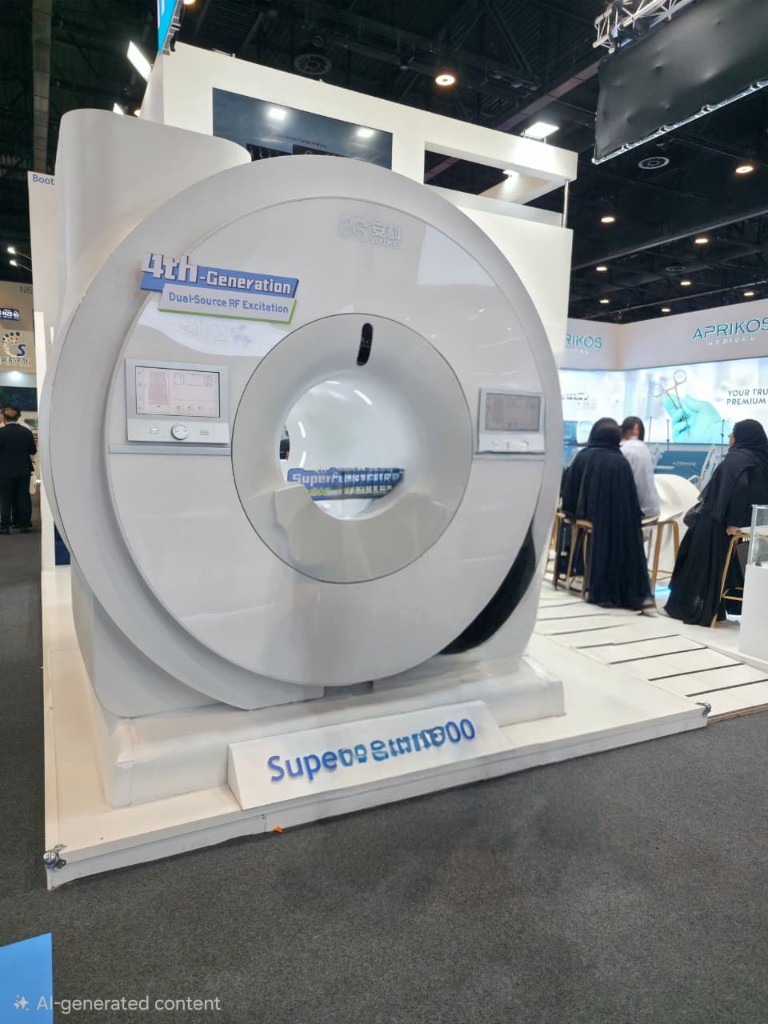
ANKE SuperMark S900 3 T MRI at Arab Health — exhibit unit with 4th-generation dual-source RF excitation branding.
Arab Health · Global launch

S900 platform — spotlighting 3 T MRI at Arab Health

At Arab Health, ANKE presented its next-generation high-field programme, including the S900 line positioned around 3 Tesla clinical performance — the segment where neuro, body, and advanced MSK protocols demand maximum signal and speed.

Show-floor systems highlighted 4th-generation dual-source RF excitation thinking (as featured on the exhibit unit) — part of a broader push toward uniform excitation, efficiency, and patient-centred workflow at ultra-high field.

For hospitals comparing 1.5 T vs 3 T: 3 T delivers higher SNR, which can translate to finer spatial resolution, faster scans, or advanced functional techniques — with site planning, SAR management, and siting rules that our team reviews with you from first conversation to clinical go-live.

Mediview brings these roadmaps to East Africa: configuration, integration, and after-sales alignment with factory programmes.

Follow Mediview

Connect on LinkedIn for company updates and industry news.